

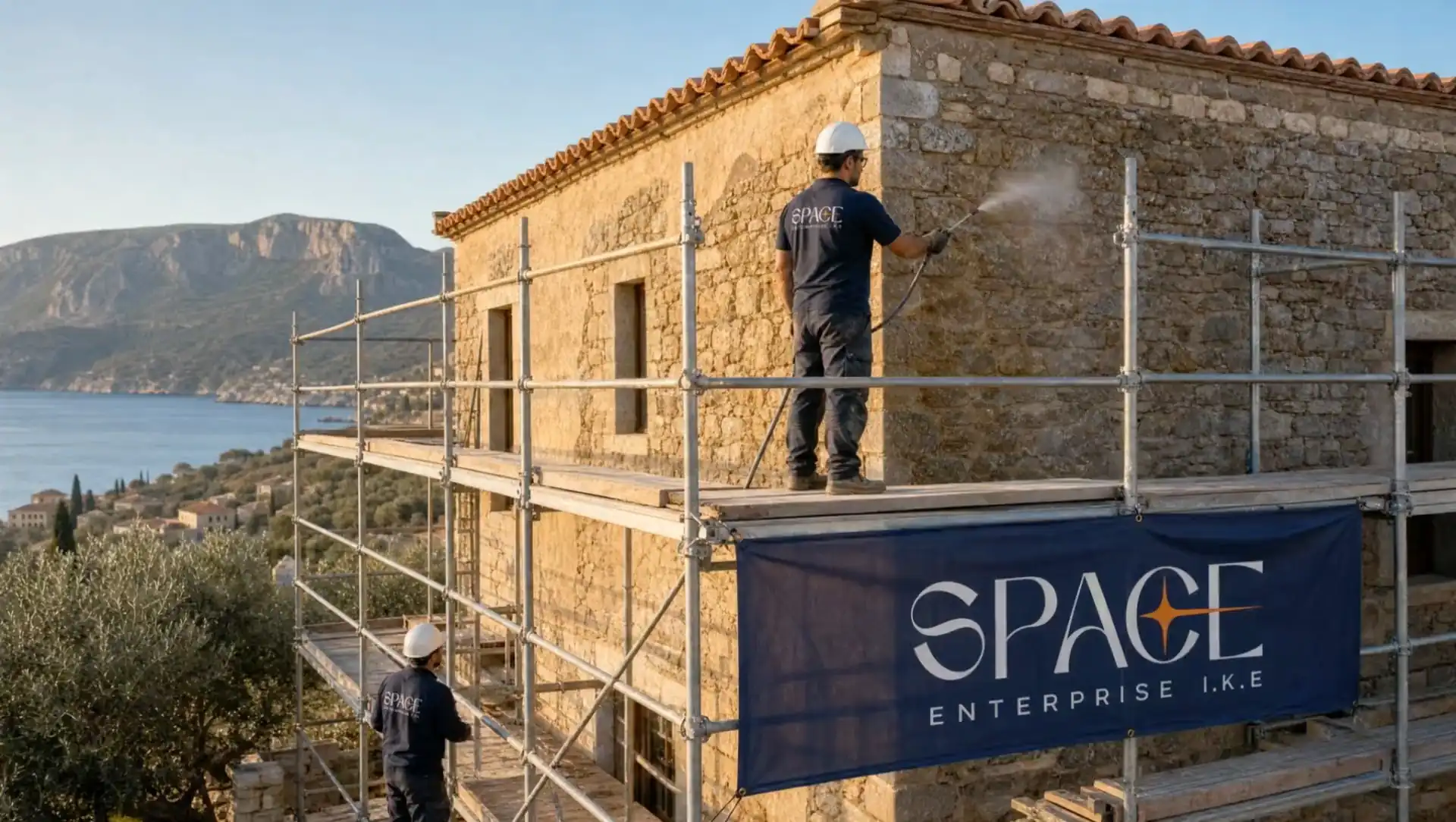
Facade protection for single-leaf masonry
We measure, test and treat natural stone facades on the Peloponnese. Invisible, breathable, documented.
The problem: one wall, one leaf
Most houses in Greece are built with single-leaf masonry. Natural stone or brick, rendered or exposed, with no second leaf and no damp barrier.
Driving winter rain pushes water into the wall. The sun pulls it back out and leaves salts behind. Salt-laden sea air makes it worse, year after year.
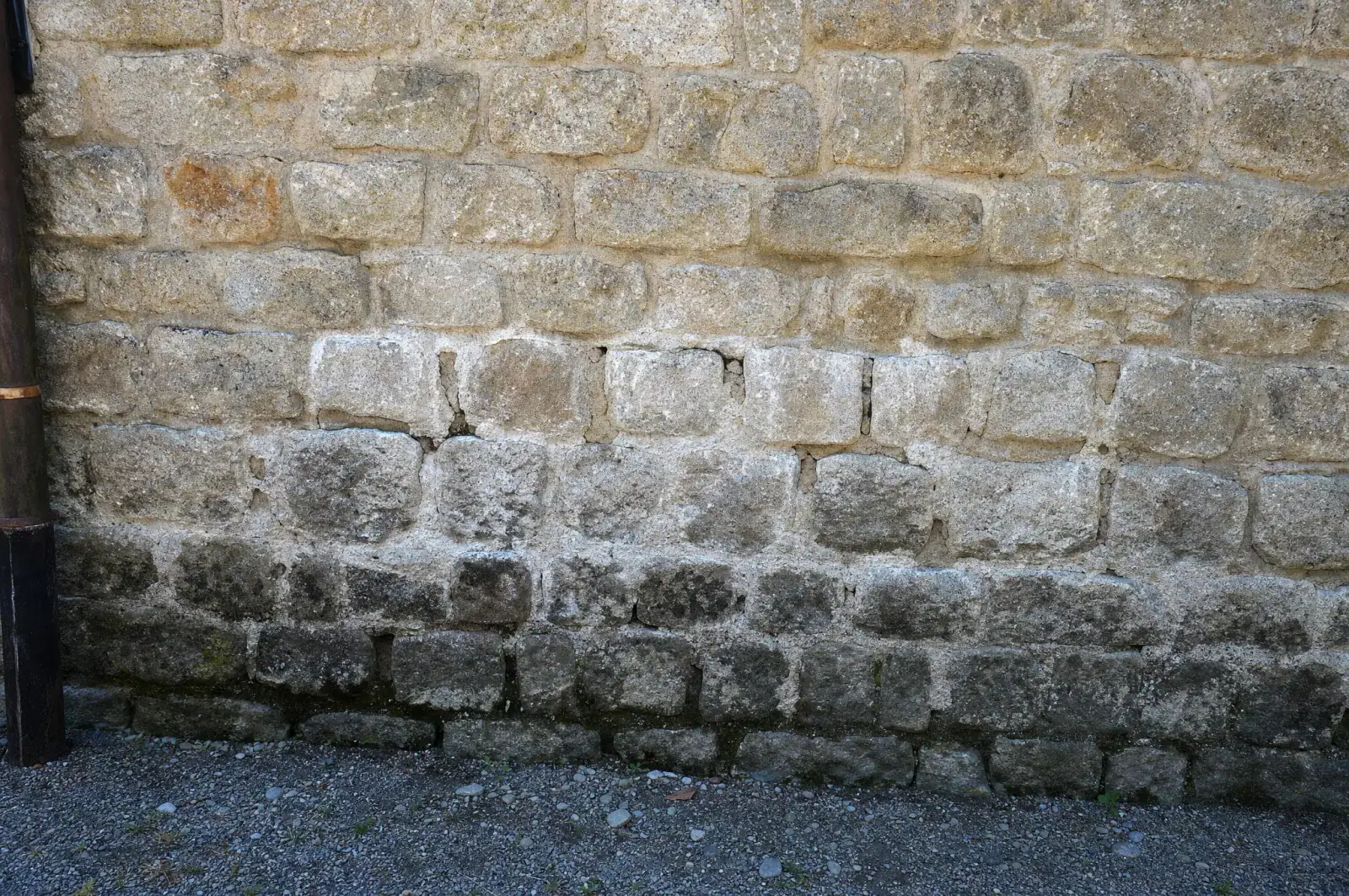
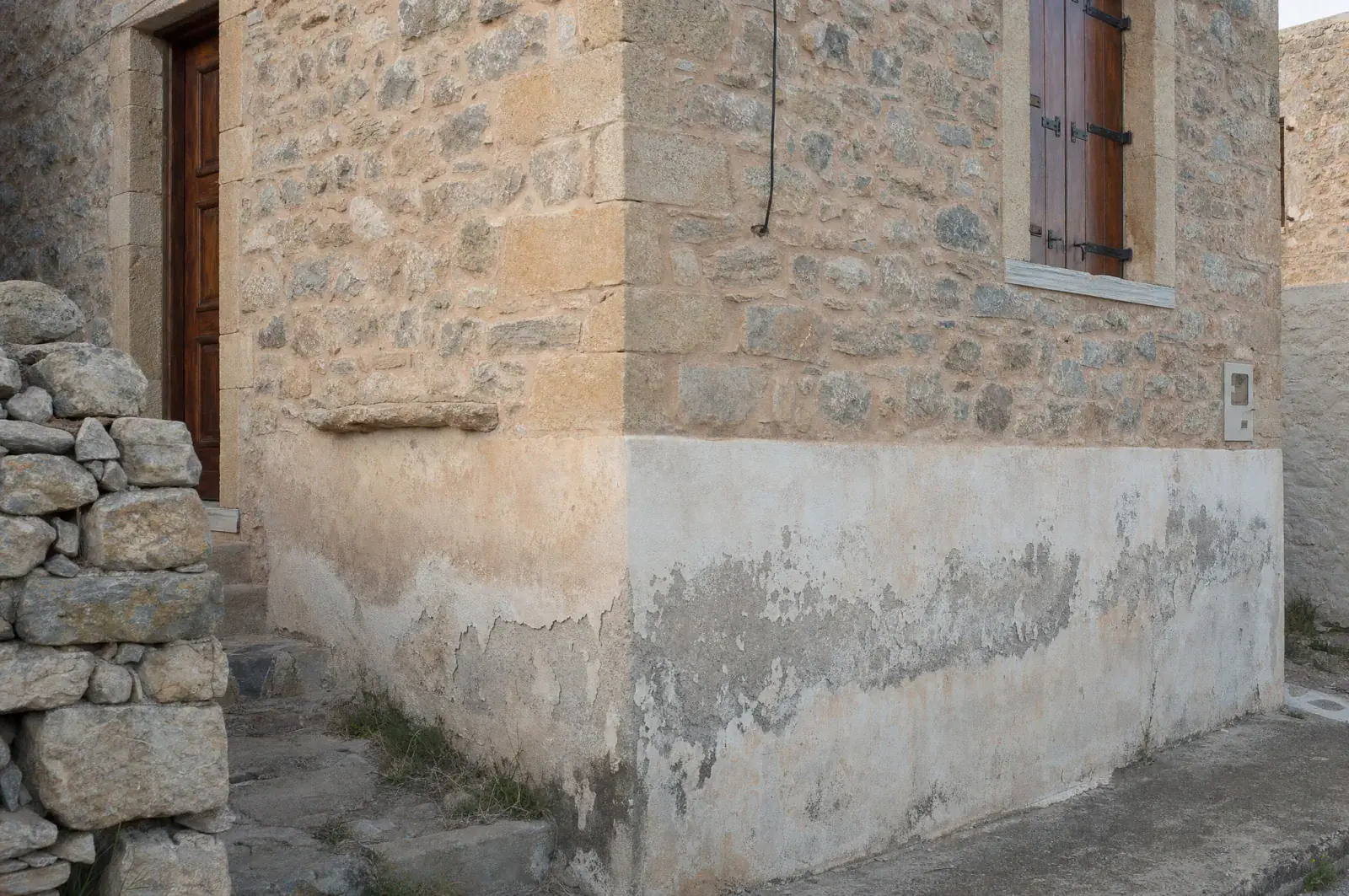
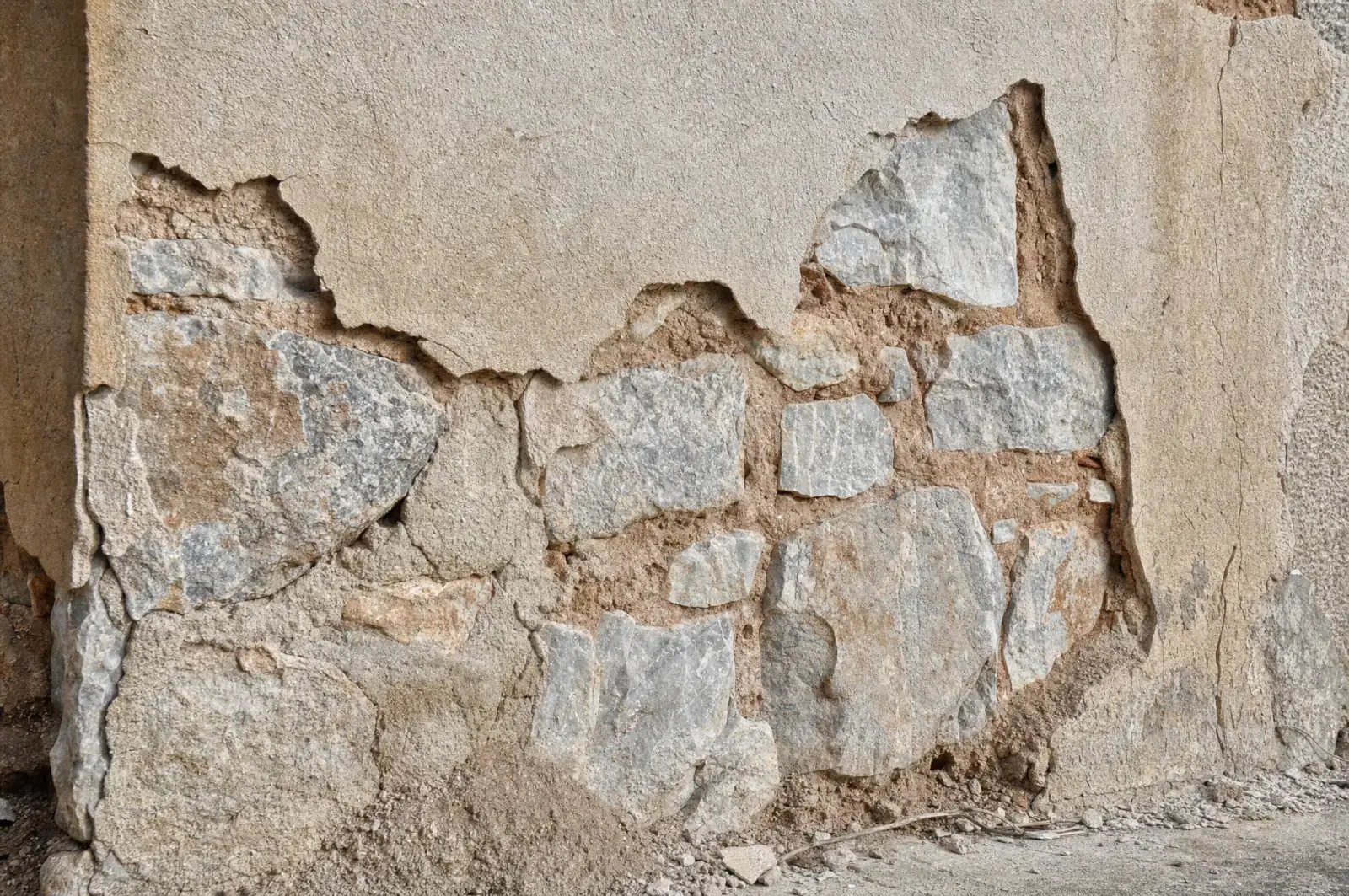
The damage follows the same pattern: efflorescence, damp plinth zones, crumbling render, stains on interior walls. Repainting only hides it for a season. The cause sits in the stone.
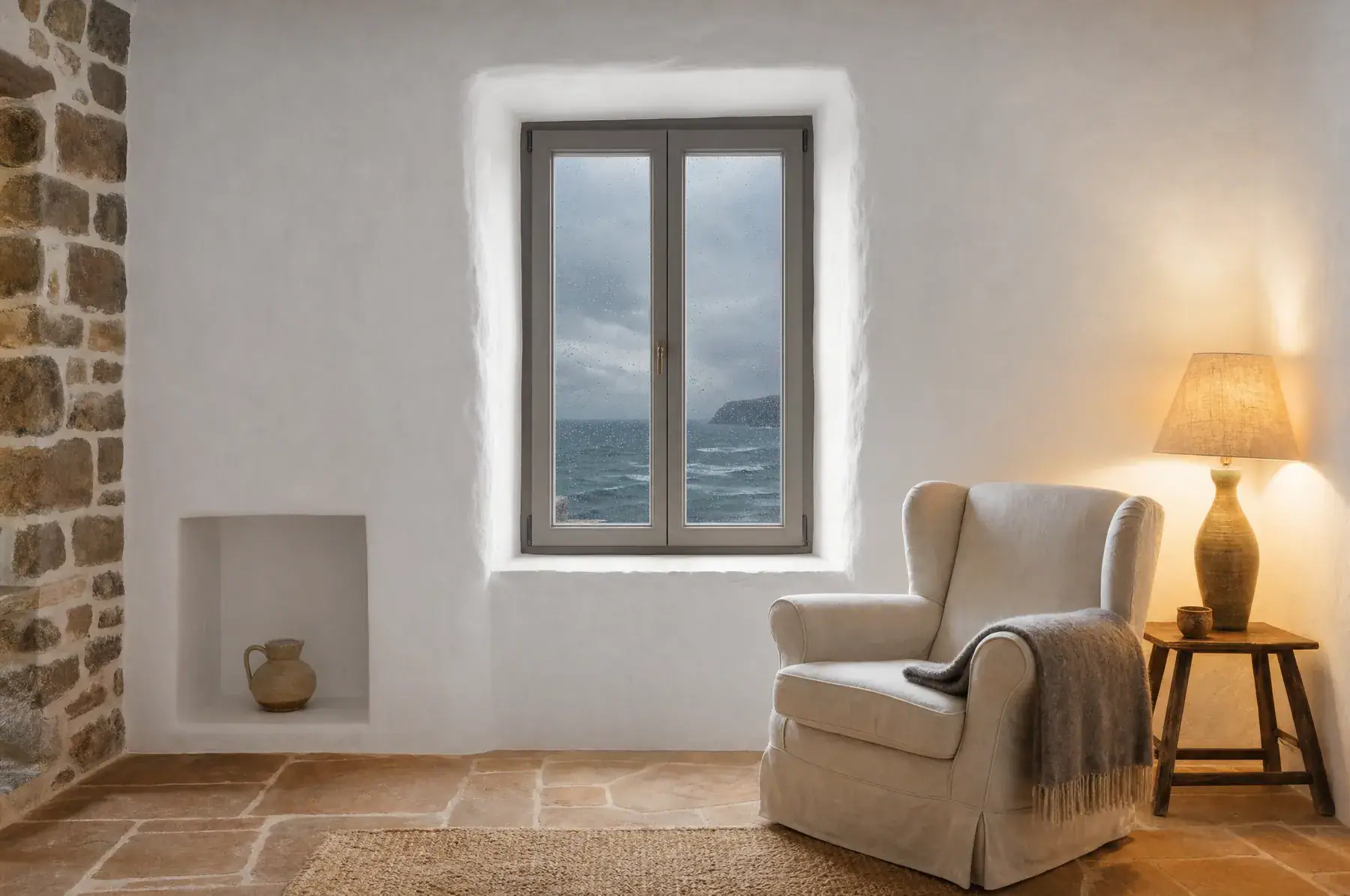
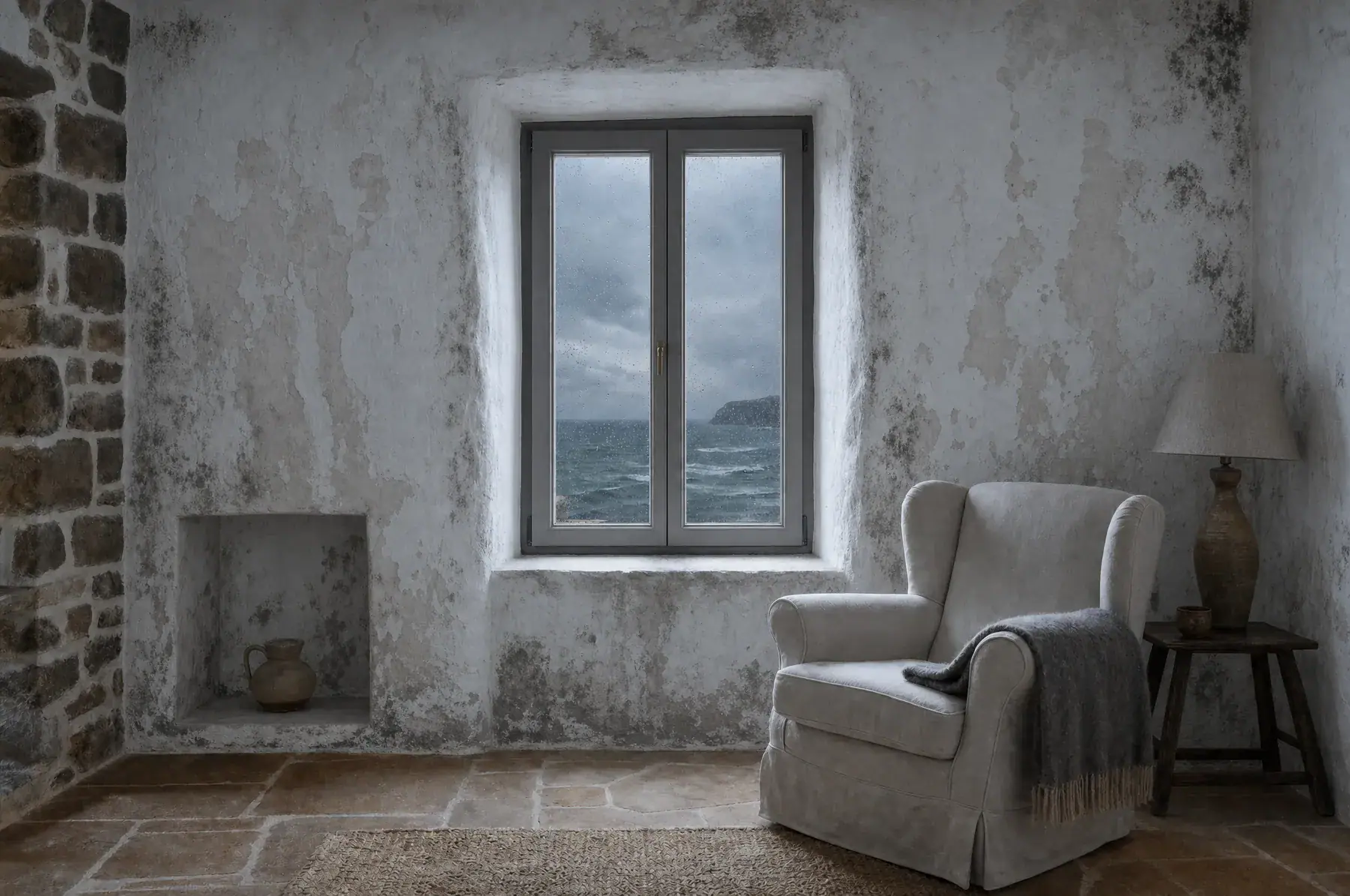
In winter, the water comes inside
Driving rain pushes water through single-leaf masonry to the inside wall. There it stays: stains spread, salts bloom, paint peels.
Mould grows in the damp corners. Mould spores in indoor air can irritate the airways and aggravate allergies and asthma, especially in children and older people.
Wet masonry insulates poorly. Rooms feel cold and clammy, and the heating runs longer.
Not every damp inside wall comes from rain. Rising damp and condensation have other causes. That is why we measure before we recommend anything.
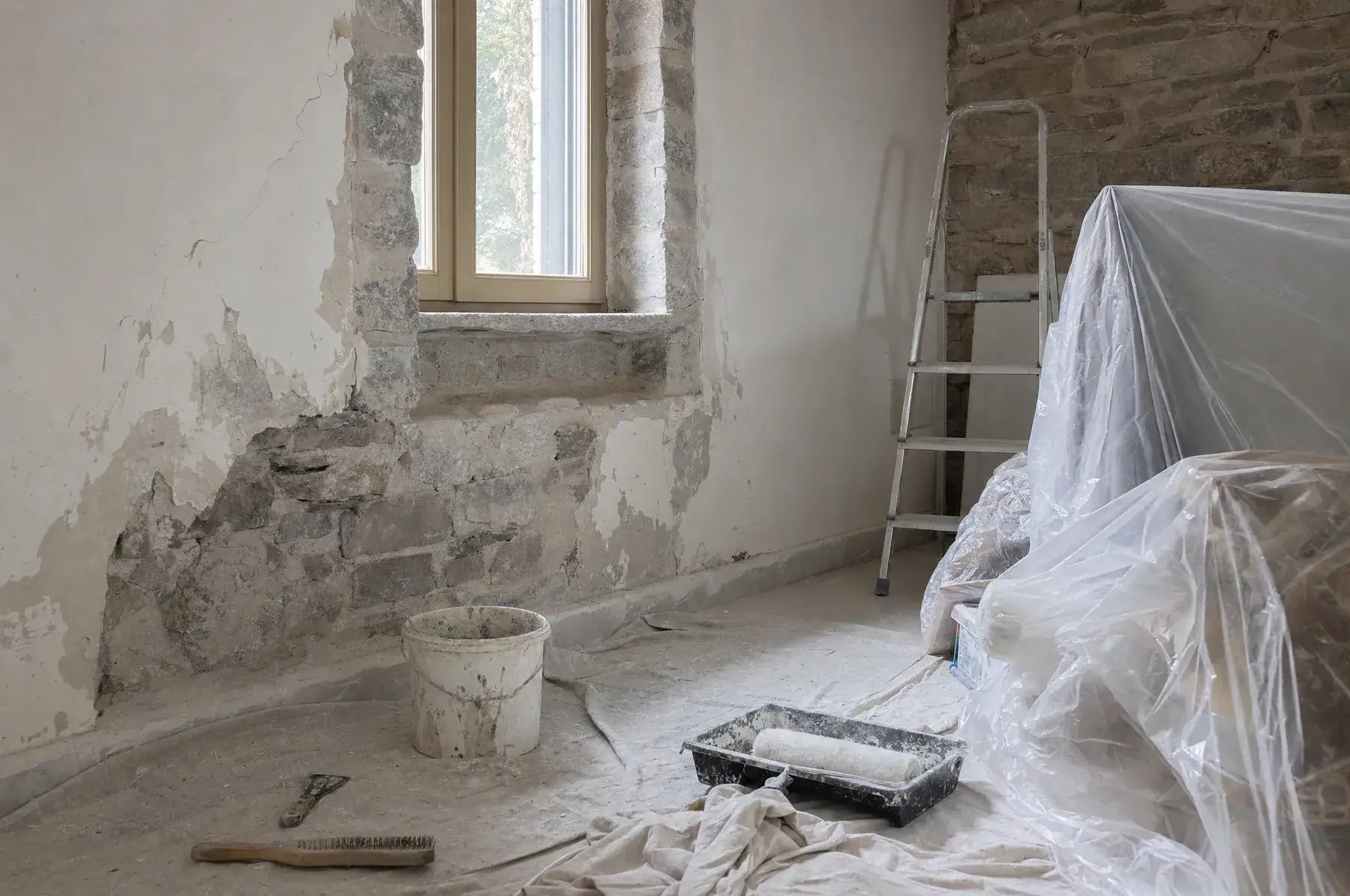
And every spring it starts again
Once winter is over, the work inside begins: move the furniture, remove the mould, scrape off loose paint and crumbling plaster, let it dry, repaint.
It costs money every year and weeks when the house cannot be lived in. Next winter the water comes back through the same wall. Repairing inside treats the symptoms. The cause is outside.
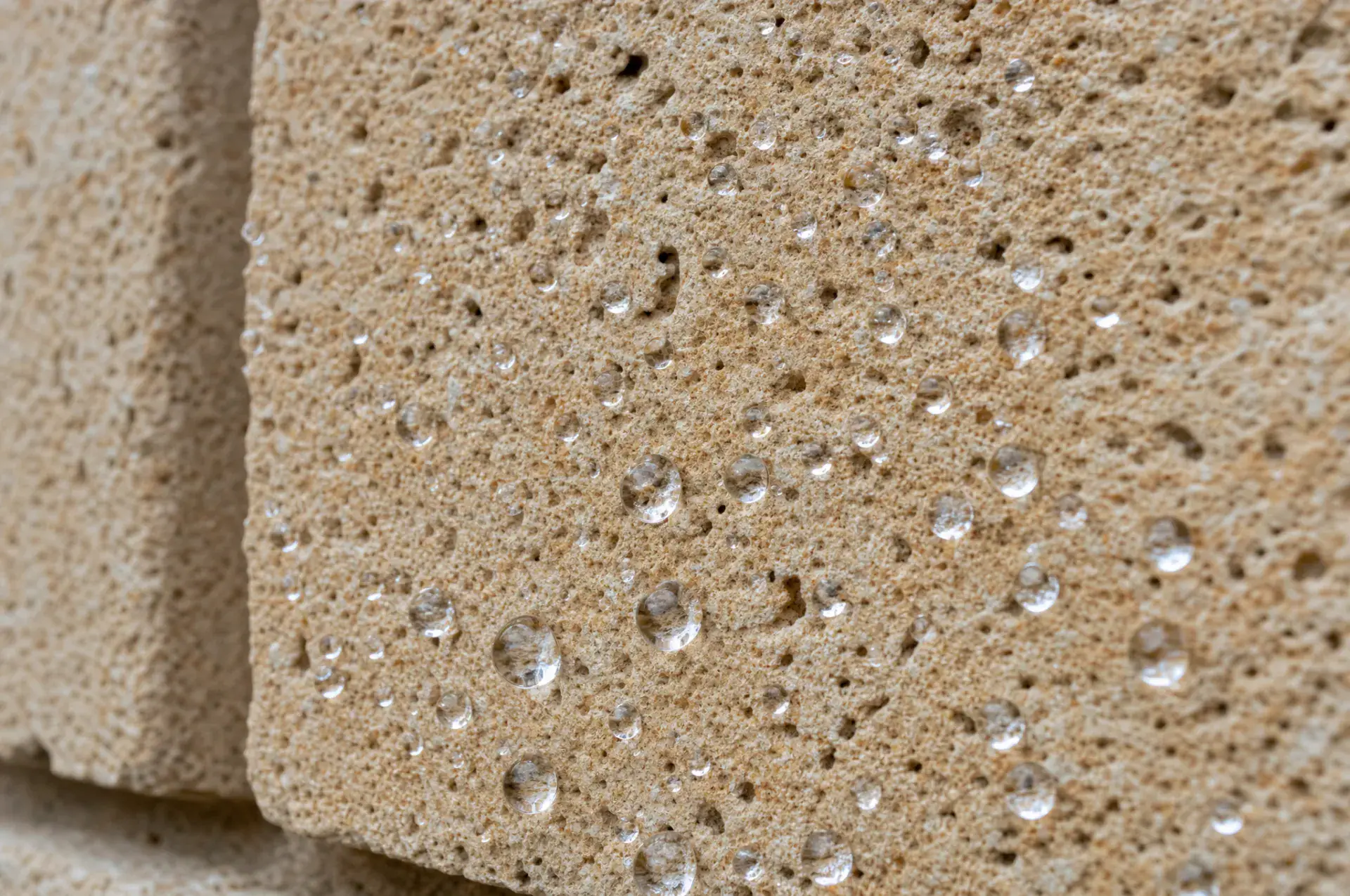
Hydrophobic treatment: protection you cannot see
We treat the facade with silane and siloxane systems. The active agent penetrates the substrate and lines the capillaries so they repel water.
Rain beads off, water vapour still escapes. The wall stays breathable and can dry out. Nothing changes visually: no gloss, no film, no colour shift.
We work with brand-name systems from European manufacturers, made for salt air, sun and winter rain. They are applied to the manufacturer's instructions and technical data sheet. We measure water uptake before and after.
A coat that peels after one winter is not protection. We do it properly once, and the effect lasts for years. Product and consumption are stated in every quotation.
What changes when the wall stays dry
How strong the effect is depends on the substrate. What we expect for your wall is in the quote after the measurement.
Dry inside walls
Rain beads off outside instead of soaking through. Stains and efflorescence inside recede.
Healthier indoor air
Without moisture from outside, mould loses its basis. The air stays fresher, the musty smell goes.
No repairs after every winter
No yearly scraping and repainting. In spring the house is ready, not a building site.
Warmer on the same heating
Dry masonry insulates better than wet. Rooms warm up faster and hold the heat longer.
The facade stays as it is
No film, no gloss, no colour change. The wall stays vapour-permeable and can dry out.
Less salt and frost damage
Less water in the stone means less salt crystallising and less frost blowing off the render.
One facade, step by step
Six steps, always in this order. No treatment without measurement, no sign-off without a report.
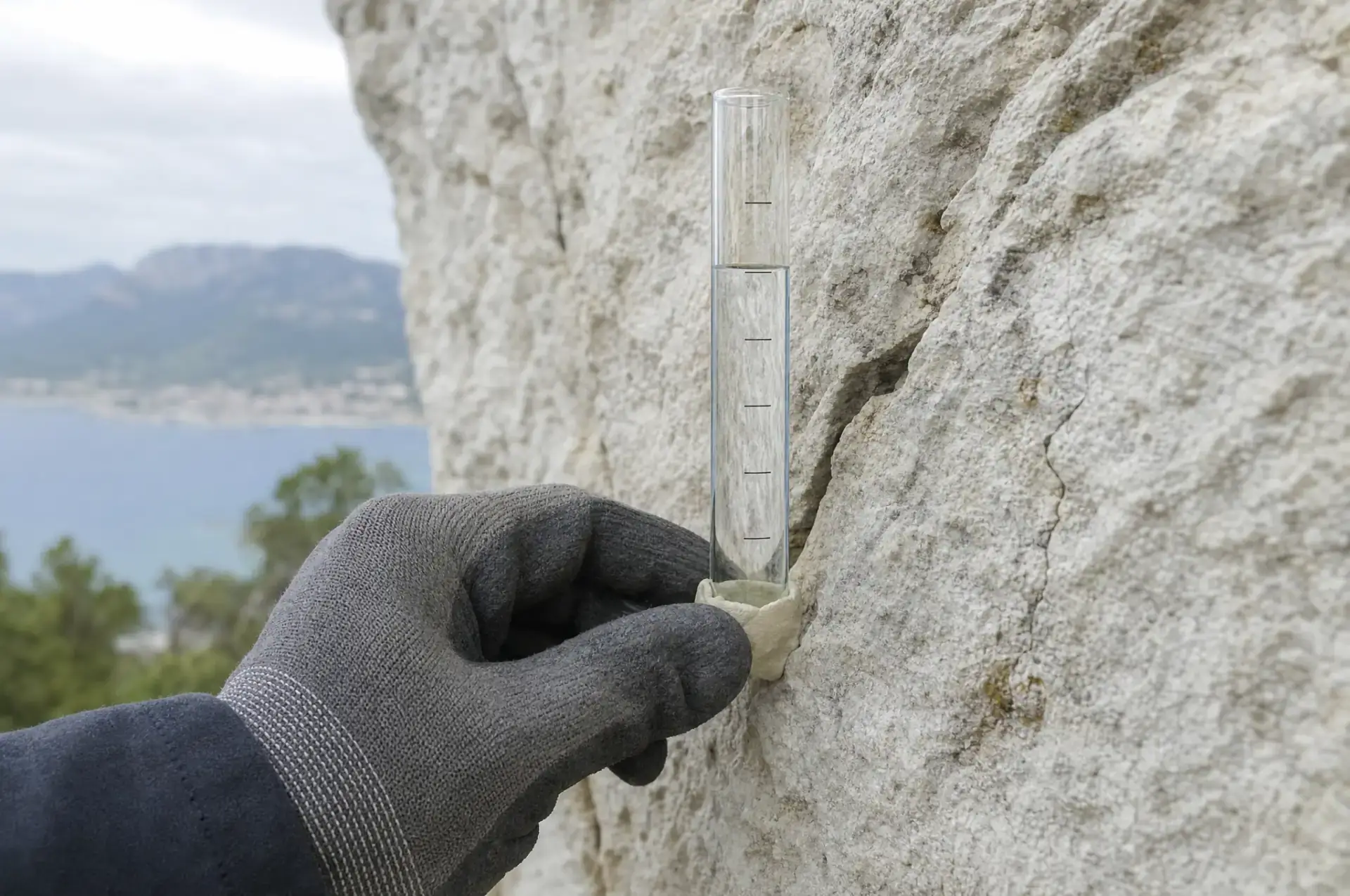
Survey and measurement
We check joints, cracks and connections and measure water absorption with the Karsten tube directly on the wall. Inside, we measure moisture. That tells us whether driving rain is the cause and how strongly the wall absorbs.
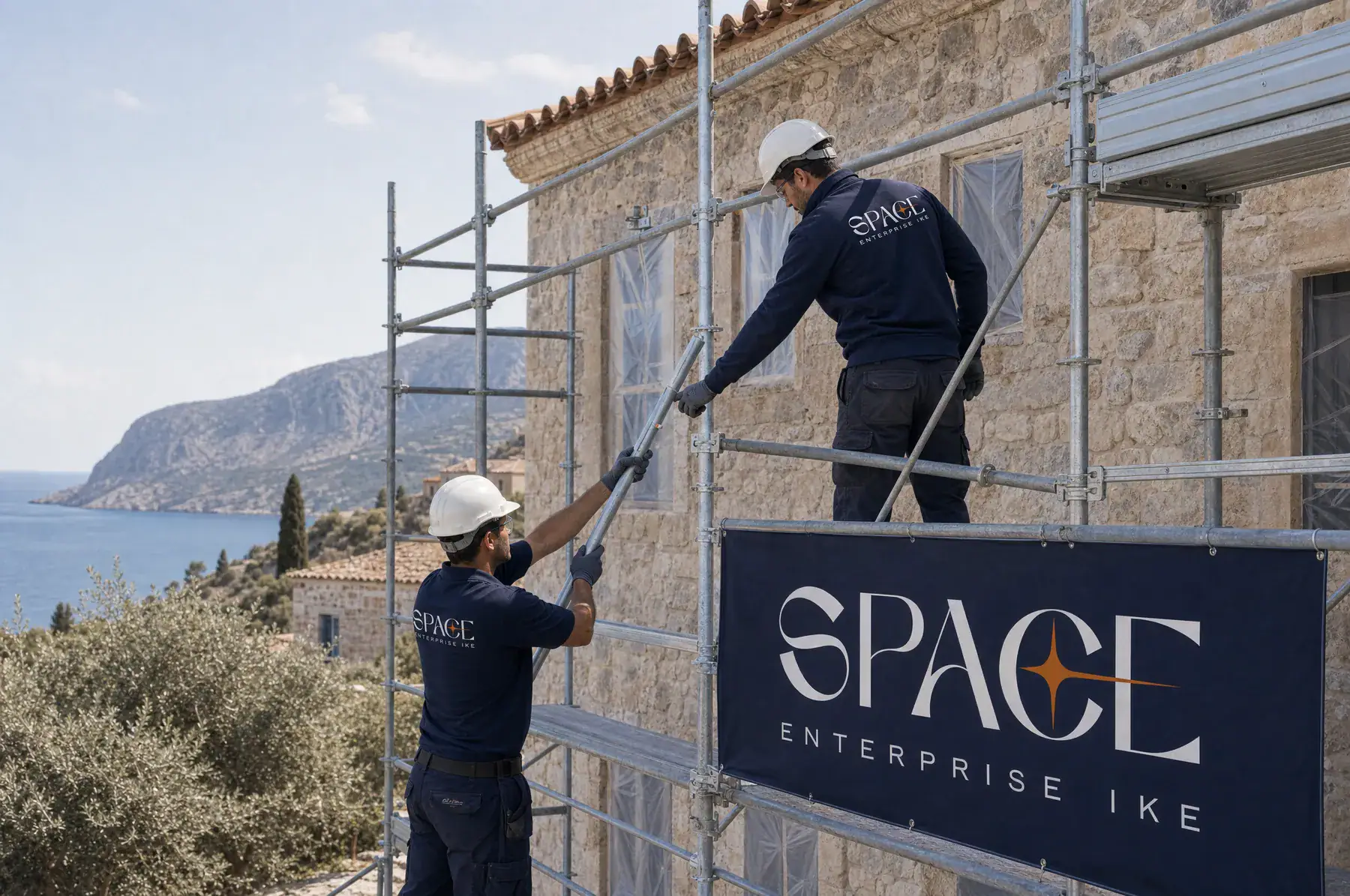
Scaffold up, surroundings protected
We put up the scaffold and cover windows, doors, plants and adjoining surfaces. Only then does work on the wall begin.
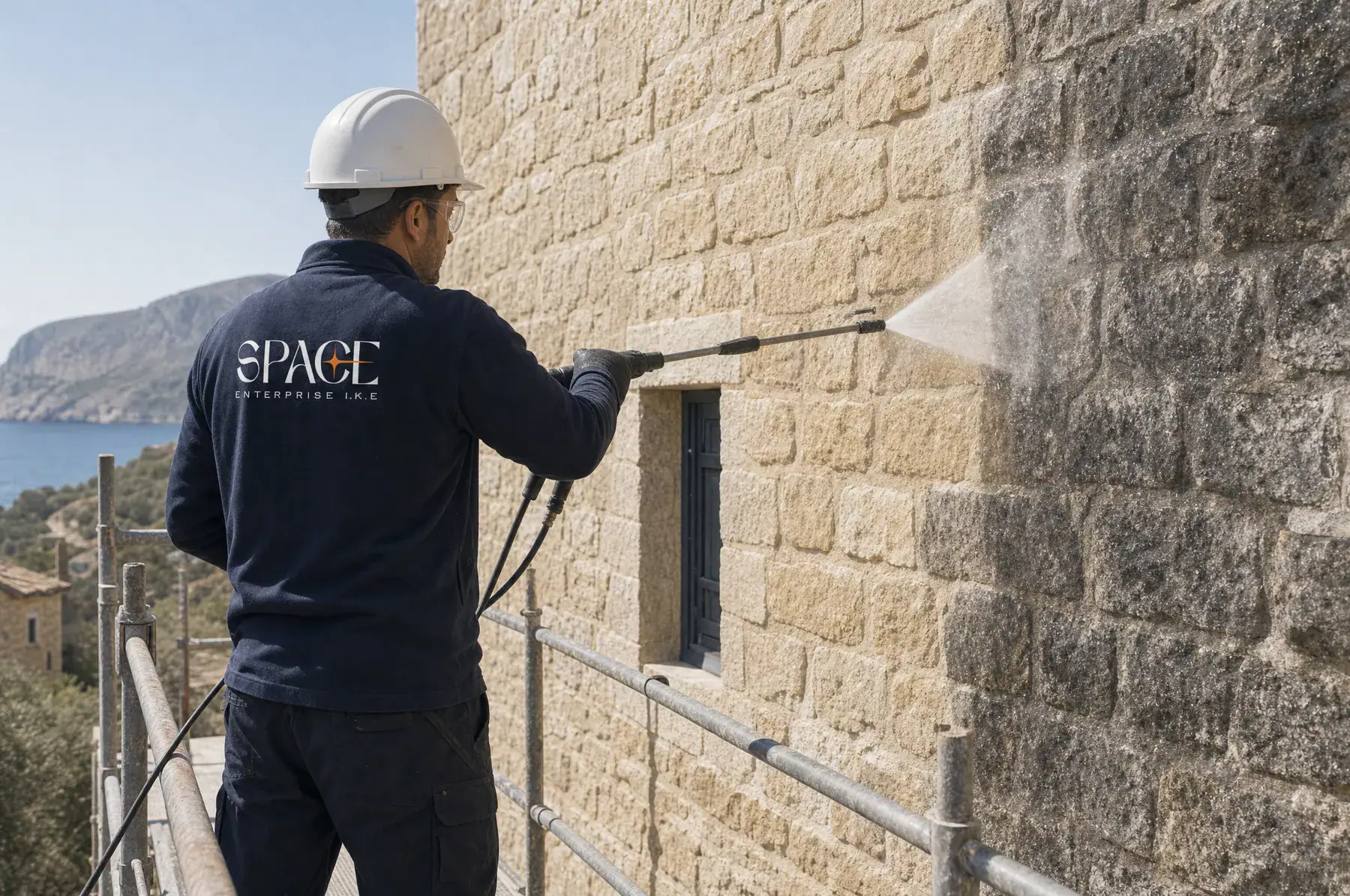
Cleaning the facade
Dirt, algae, lichen and loose material come off with the pressure washer, at an adjusted pressure so stone and joints are not harmed. Afterwards the wall has to dry out.
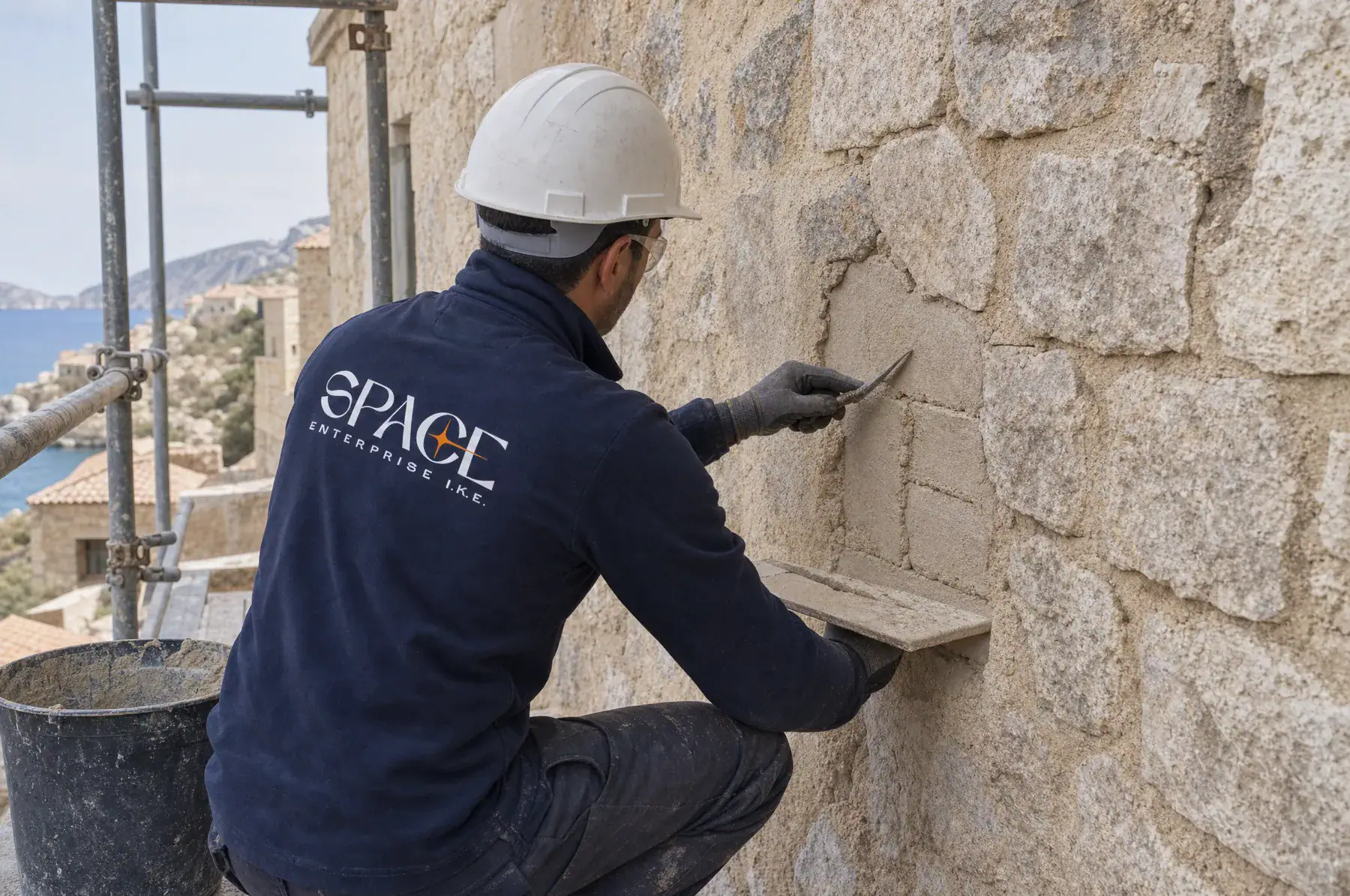
Repairing render and joints
We close spalled render, open joints and cracks with a suitable lime mortar. This happens before the impregnation: fresh mortar bonds poorly to a hydrophobic surface, and the impregnation does not bridge cracks.
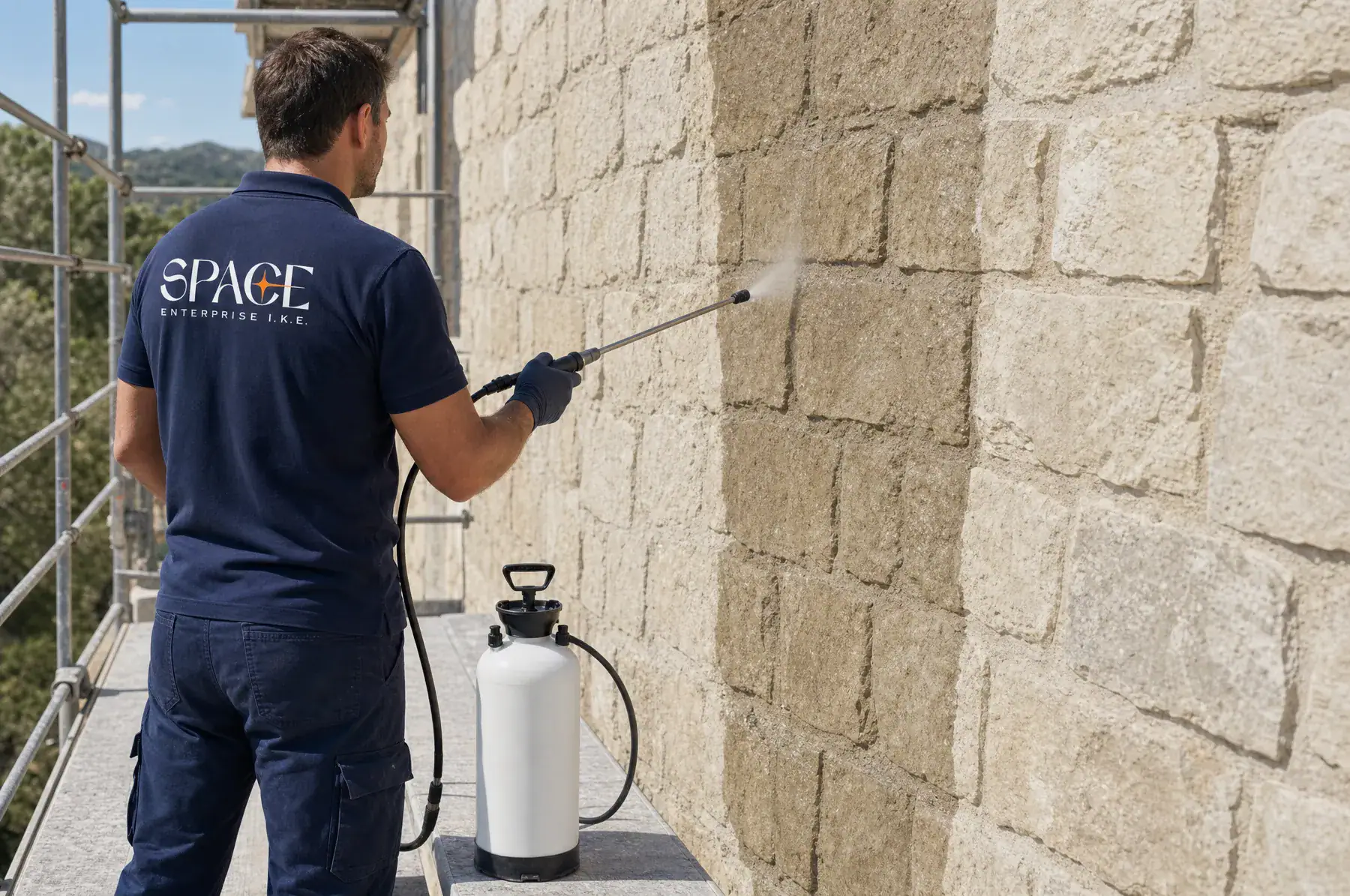
Test area and impregnation
First a test area, then the whole facade. Following the manufacturer's instructions, we spray the silane-siloxane system at low pressure from top to bottom, wet on wet, until the stone is saturated. Only on a dry wall and in suitable weather.
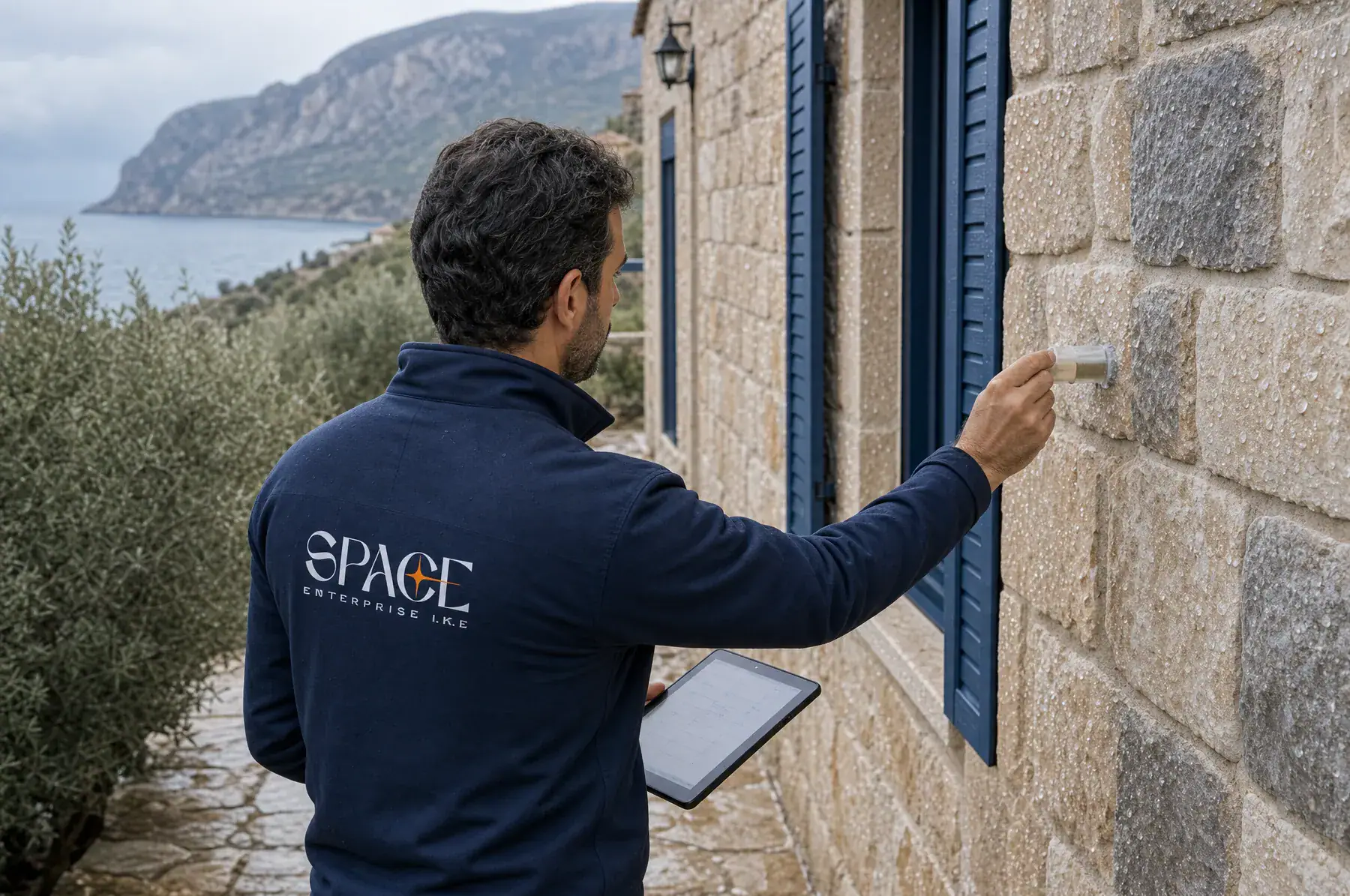
Re-measurement and report
We measure again and compare with the initial values. You receive a report with readings, material consumption and photos.
Are you a manufacturer looking for a partner in Greece?
We handle import, customs, warehousing, distribution and invoicing. And we apply the product ourselves: measured, executed to specification and documented.
You get a partner who understands your application technology and settles claims on site, not just a reseller.
The Greek market for facade protection is barely developed. Single-leaf masonry is the norm, so the need covers the whole country. We know the buildings, the owners and the region.
Speak to us directly: Peter Dundovic, owner and managing director. Phone +49 176 41532955, email post@space-enterprise.eu.